
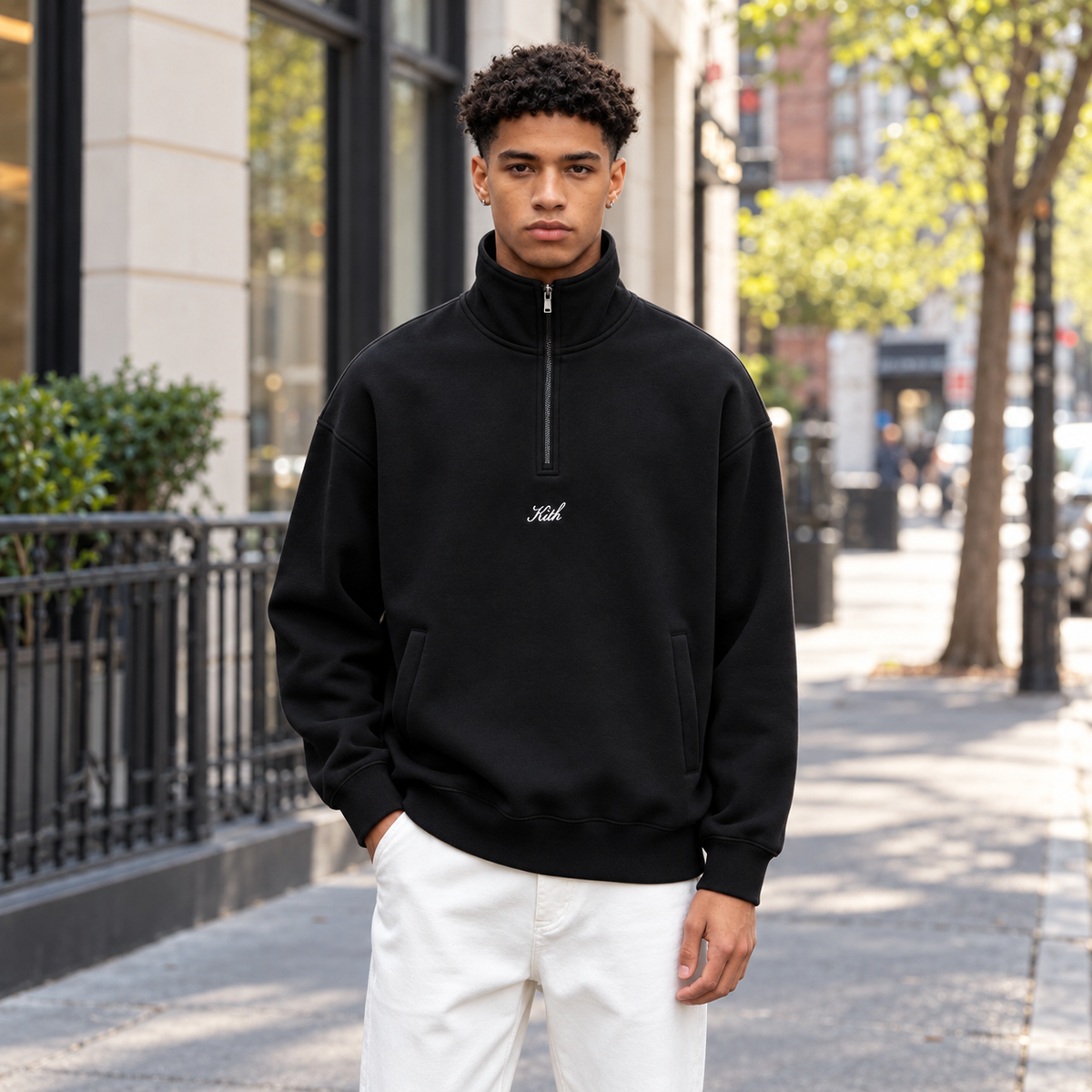
Kith Classic Logo Quarter Zip Sweatshirt Black is defined less by a loud graphic and more by how several restrained details work together. The embroidered Classic Logo adds physical texture to the chest, the hoodless stand collar changes the upper silhouette, and the quarter-zip opening introduces a hard vertical line through an otherwise soft sweatshirt body. Black keeps those elements visually controlled. The result sits between a conventional crewneck and a hoodie, but it does not simply split the difference—it creates a cleaner, more structured way to wear a sweatshirt.
The Embroidered Logo Gives the Branding Real Texture
The Classic Logo is especially important because it is embroidered rather than treated like a large flat print. Embroidery gives the branding a raised surface and clearer edge, so the Kith identity can remain visible without needing oversized artwork across the chest.
That works particularly well on Black. Instead of relying on a bright graphic to create contrast, the stitched logo can be noticed through texture and finish. Up close, the embroidery becomes part of the construction; from farther away, the sweatshirt can still read as a clean black layer.
This is the better approach for someone who wants recognizable Kith branding but prefers a quieter graphic hierarchy. The logo is present, but it does not overpower the collar, zipper, or overall shape.
The Hoodless Stand Collar Changes the Whole Silhouette
The absence of a hood is one of the most useful differences from a standard hoodie. A hood adds fabric volume behind the neck and shoulders, while this quarter-zip design keeps the back cleaner and concentrates more structure around the stand collar.
That changes how the sweatshirt looks under outerwear as well. A jacket can sit over it without another hood stacking behind the collar, and the neckline remains visible as a deliberate part of the outfit rather than disappearing underneath extra fabric.
Worn on its own, the stand collar also creates a sharper upper line than a crewneck. It gives the sweatshirt more shape around the neck without turning it into a formal knit or jacket.
The collar is therefore not a small detail. It is what gives the piece much of its identity.
The Quarter Zip Gives the Collar Two Different Modes
The zipper changes how that stand collar behaves. Pull it higher and the neckline becomes more closed and structured. Open it and the collar relaxes outward, exposing more of the tee or base layer underneath.
This gives the same sweatshirt two different proportions without adding or removing another garment. Closed, the upper body looks cleaner and more contained. Open, the neckline becomes wider and the layer underneath starts contributing to the color and texture of the outfit.
The zipper also brings a harder piece of hardware into contrast with the sweatshirt fabric. That small material difference matters: soft textile around the body, stitched embroidery at the chest, and zipper hardware at the neck each create a different surface.
The Material Works as the Background for the Details
The sweatshirt body has an important role even when the exact fiber composition or GSM is not the main selling point. Its job is to provide a relatively uninterrupted fabric surface that allows the embroidery, collar construction, and zipper to remain easy to read.
A more complicated panelled fabric could compete with the Classic Logo and stand collar. Here, the black sweatshirt surface keeps the visual hierarchy simple: first the overall shape, then the collar and zip, then the embroidered branding.
That simplicity is also what separates the piece from a shell jacket or technical quarter zip. The garment still belongs to the sweatshirt category, but the neck construction gives the familiar fabric a more considered form.
Black Makes the Construction More Important Than Color
Because the body is Black, the purchase does not depend on an unusual seasonal shade. The value has to come from the construction itself. That is a useful test for this particular piece.
Against charcoal trousers or washed black denim, the quarter zip can stay within a dark palette while the stand collar and embroidery provide the detail. With lighter pants, the black upper half becomes the stronger visual block, but the sweatshirt still remains cleaner than a hooded graphic piece.
Black essentially removes color as a distraction and makes it easier to notice the embroidery and neckline design.
It Works Best When the Collar Is Allowed to Show
For a simple outfit, wear the zip partly closed with dark trousers and keep the collar standing naturally around the neck. The sweatshirt becomes the main upper layer, and the embroidered Classic Logo provides enough branding without requiring another graphic.
For layering, open the quarter zip over a white, grey, or faded neutral tee. The exposed base layer creates a vertical contrast through the black body, while the hoodless collar keeps the neckline cleaner than a traditional hoodie would.
This is where the design becomes more practical: the same sweatshirt can move from a compact, closed-neck look to a more relaxed layered one through the zipper alone.
Why This Piece Is More Than a Basic Black Sweatshirt
If the product only had a black body and a small logo, it would be much closer to a standard branded crewneck. The combination of embroidered Classic Logo, hoodless stand collar, and quarter-zip closure gives it a clearer reason to exist.
If that construction is what your wardrobe is missing, you can browse Kith at AFewVibe after comparing it with the hoodies and crewnecks you already own.
The strongest reason to choose Kith Classic Logo Quarter Zip Sweatshirt Black is not simply that black is easy to wear. It is the way embroidery, sweatshirt fabric, stand collar, and zipper hardware create four different textures inside one restrained design.
Share:
Inside the Essentials Nylon Fleece Hoodie