

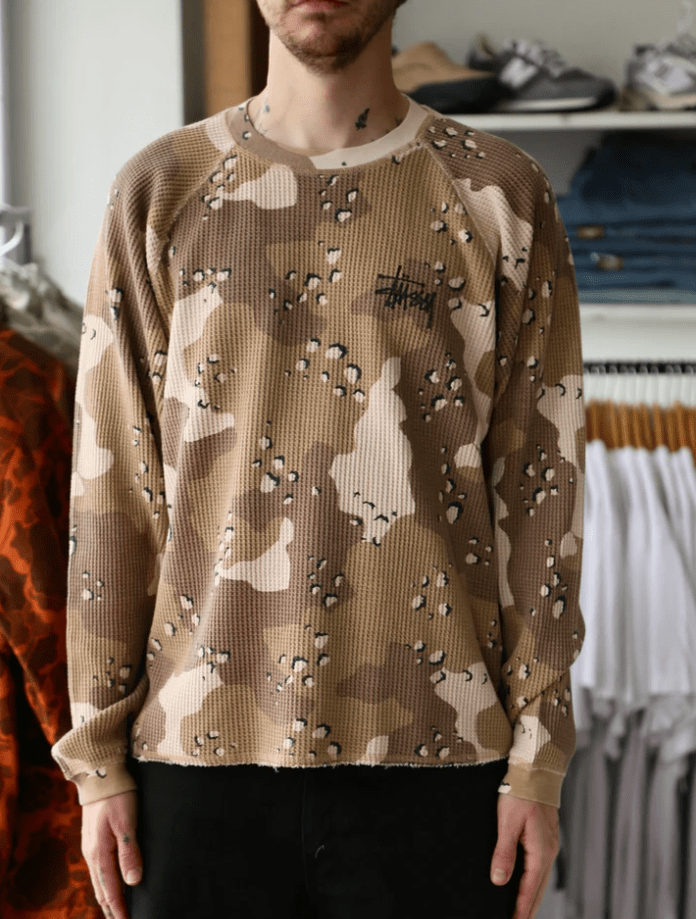
Stussy Raglan Thermal Long-Sleeve Crew Desert Camo is not the piece I use when I want the outfit to “blend in.” It is the piece I use when I want one visible layer to do the styling work while everything else stays quiet. This is a pattern-control playbook: how to keep desert camo wearable, how to use the raglan thermal shape to avoid bulk, and how to repeat the shirt across a week without every look feeling like the same outfit.
The Angle: Control the Pattern, Don’t Fight It
Most camo mistakes come from over-matching. People see camo and add more “utility” signals—extra pockets, heavy boots, louder caps, too many dark layers. That turns a good thermal into a costume. My rule with this shirt is simple: let the camo be the texture-and-pattern layer, then use clean shapes around it so the outfit stays modern.
Why This Piece Is Easier to Repeat Than a Graphic Long Sleeve
A graphic tee usually asks for a front-facing outfit. This thermal works differently. The waffle knit adds depth even when the pattern is partially covered by a jacket, and the raglan sleeve line keeps the shoulder shape relaxed without looking stiff. That means the shirt still contributes to the outfit when it is only half visible.
Desert camo also helps here. It usually reads softer than darker camo palettes, so it can sit next to washed denim, charcoal, stone, and off-white without making the whole fit feel aggressive.
Unique Block: The “Frame / Fade / Finish” Method
When I style this shirt, I use a three-part method so I do not overthink it later. Frame: choose one stable base shape (straight denim or tapered cargos). Fade: add one washed or muted element (faded cap, worn sneakers, washed jacket) so the camo feels integrated. Finish: stop early—one accessory max. The shirt already has enough visual information. This method keeps the thermal looking intentional instead of busy, and it works in daylight, indoor lighting, and low-light photos.
Fit Strategy: Let the Raglan Shape Keep It Easy
I treat this as a movement-friendly layer, not a compression layer. The raglan shoulder should feel easy when reaching, carrying, or layering under a jacket. I want the sleeves to land cleanly at the wrist and the body to drape straight without grabbing the torso. If the fit is too tight, the waffle texture looks strained and the camo loses its natural balance.
For standalone wear, I choose an easy fit. For layering, I still avoid sizing too tight because thermals look better when the surface texture can read clearly.
Three Real-Use Scene Setups (Different From the Usual Rotation)
Scenario 1: Furniture showroom afternoon (bright overhead light, lots of sitting/standing)
Wear it with charcoal straight pants and simple sneakers. The raglan thermal stays comfortable while you move, test seats, and carry small boxes. Desert camo reads better than a flat solid under harsh store lighting, so the outfit still has shape without extra layers.
Scenario 2: Community court sidelines (watching a game, cool breeze, casual photos)
Pair it with washed denim and a quiet cap. Bring a light jacket, but keep it open when you can so the thermal texture shows. The camo adds energy to a simple sideline fit without pushing it into full sportwear mode.
Scenario 3: Late-evening food truck stop (mixed lighting, standing around, fast photos)
Go with dark relaxed pants and worn-in sneakers or boots. Keep accessories minimal. The pattern and waffle knit will carry enough visual interest in mixed light, especially when everyone else is in plain hoodies and jackets.
Unique Block: How I Rotate It Across a Week Without Repeating the Same Look
I do not change the shirt’s role every day—I change what sits around it. One day it is the visible top layer with dark pants. Another day it sits under an open overshirt so only the thermal texture and part of the camo show. A third day it becomes the mid-layer under a jacket, where the raglan line still helps comfort but the outfit reads more tonal. Same shirt, different visibility level. That is how a patterned thermal becomes practical instead of occasional.
Care & Longevity: Keep the Waffle Surface Alive
Turn it inside out before washing, use cold water, and run a gentle cycle. Avoid washing it with heavy items that crush or over-rub the waffle knit. Air dry when possible so the cuffs and body hold shape better over time. For sizing confidence before buying, use Stüssy’s size guide as your baseline and then decide how much room you want for layering.
Where to Click Next
If this thermal fits your lane, start with the brand lineup and compare it against other Stussy pieces before you decide what belongs in the same rotation: AFV — Stussy Collection.
Final Notes
This thermal works when you let the pattern be a controlled accent, not the entire theme. Keep the silhouette clean, use texture as the first layer of interest, and rotate how visible the shirt is across the week. That is how desert camo becomes repeatable.
Share:
Stussy Cali Grown Zip Hoodie Slate — Slate Zip Layering Logic
Palace x Neighborhood Skull Zip Hood Navy — Weekender Layer Memo