

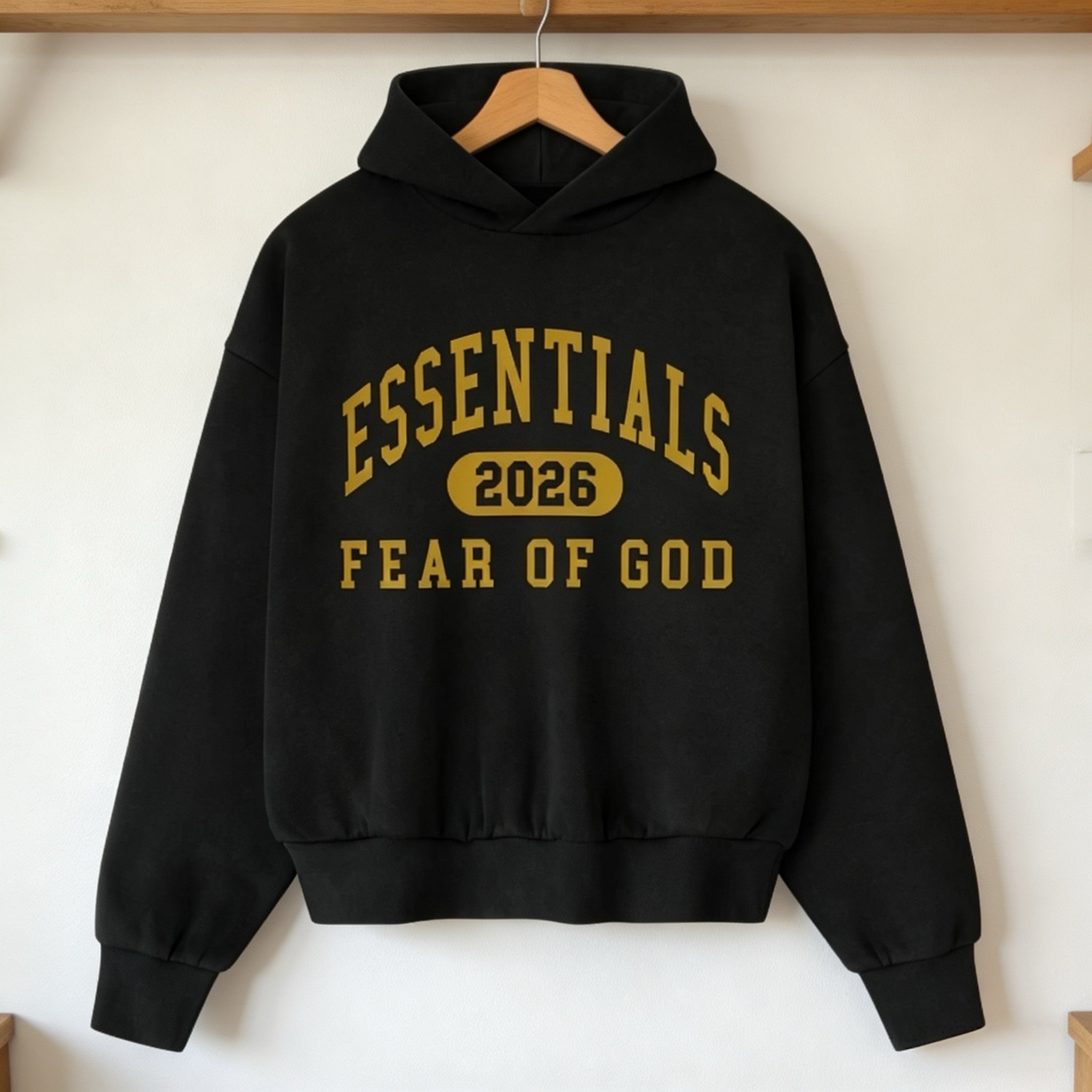
There’s a reason some hoodies become “default” and others stay in the closet. The Fear of God Essentials Classic Fleece Hoodie Vintage Black lands in that sweet spot: soft enough for long hours, structured enough to look intentional when you’re out.
This post uses one lens: Vintage Black Structure. Not “just another black hoodie,” but a muted black that styles easier, and a fleece build that holds shape better through a full day.
Quick take: who this hoodie fits best
If you like clean streetwear that doesn’t feel loud, this is the easy pick. The color reads broken-in rather than pitch-black, so it pairs with washed denim, charcoal trousers, and even slightly faded sneakers without fighting the rest of your outfit. The overall Vintage Black Structure effect is simple: it looks calm, but still feels designed.
For matching pieces (tees, sweats, shorts) in the same neutral lane, the quickest way to build a full set is the Essentials collection.
Day-wear story: what changes from morning to night
Morning commute: Vintage black is kinder in daylight. It doesn’t look “new-new,” and it’s less harsh against skin tones than true black. If you tend to repeat outfits, this color makes repetition feel more like a uniform and less like a fallback.
Midday indoors: Here’s where structure matters. A hoodie can be soft and still look sloppy if it collapses at the hood, shoulders, and cuffs. This one reads more “set” through the upper body, which helps your silhouette look balanced even with relaxed proportions.
Evening temperature drop: You can layer a jacket over it without feeling like the seams are fighting you. The hoodie doesn’t need to be oversized to feel roomy; it’s already built to sit relaxed, so outerwear on top feels smooth instead of bulky.
Unique block 1: how “vintage black” actually styles better (real outfit logic)
When people say vintage black is “easier to wear,” they usually mean it forgives contrast. Pure black demands perfect blacks everywhere—black pants, black shoes, black bag—otherwise it can look mismatched. Vintage black is softer, so you can pair it with charcoal cargos, a washed grey jean, or even dark olive without the outfit feeling off. The trick is to let Vintage Black Structure be the quiet anchor: keep the rest of the fit in muted tones and choose one texture to add depth—brushed denim, matte nylon, or a slightly pebbled leather bag. It reads deliberate, even if you’re dressing fast.
Fit & sizing: choose the silhouette you want
Think about shoulders first, not length. The relaxed proportion comes from the drop and the body volume, so sizing is less about “how long” and more about “how wide you want the frame.”
Use this decision path:
• Prefer cleaner lines: consider sizing down one, especially if you’re between sizes.
• Want the intended Essentials look: stay true to your usual hoodie size.
• Like a bigger street silhouette: keep your size and add a tee under it, not a thick layer.
The best version of Vintage Black Structure is when the hoodie sits relaxed but still holds a defined shoulder line. That’s what keeps it from looking like sleepwear when you’re out running errands.
Details that change the wearing experience
Small design choices decide whether a hoodie looks “flat” or “designed.” The hood’s build is a big one: if it collapses, your upper body looks droopy. When it holds a bit of shape, it frames your neck and shoulders and makes the whole hoodie read more intentional. Rib-knit cuffs and hem also matter because they keep the body from ballooning when you sit, stand, and move throughout the day.
The graphic is the other big variable. A clean front print gives the hoodie a focal point, so you don’t have to stack logos elsewhere. It’s a good match for plain bottoms and simple outerwear, especially when you want the outfit to feel cohesive instead of busy.
Unique block 2: the print changes how you layer (and why that matters)
A front graphic turns a hoodie into the “center” of the outfit. If you wear it under an open coat, your eye goes straight to the chest—so your jacket should be calmer, not louder. With Vintage Black Structure, the print reads sharper because the base color is muted, which makes clean outerwear look more expensive: a minimal bomber, a simple denim jacket, or a plain wool coat. One underrated move is to match that structure with footwear: shoes with a defined sole (chunkier sneakers or a solid boot) keep the outfit from feeling top-heavy. It’s a small styling tweak that makes the whole look feel balanced.
Care & longevity: keep fleece and print looking right
Hoodies age fastest from heat and friction. If you want the fleece to keep its hand-feel and the print to stay crisp, wash cold, turn it inside out, and avoid high heat drying. That’s the simple routine that keeps the surface from looking worn too early.
If you’re the type who wears one hoodie several times a week, this care habit is what preserves the “new enough” look. That’s the quiet value of this piece: it’s built for repetition. Repetition is exactly where Vintage Black Structure pays off—because the color and silhouette stay readable even after many wears.
Differentiation: why it doesn’t feel like a generic black hoodie
Generic black hoodies often fall into two camps: soft but shapeless, or structured but stiff. This one aims for comfortable structure—relaxed, but with a silhouette you can trust when you’re outside the house. Vintage black also separates it from the typical “flat black hoodie” look; it feels more lived-in and less severe, which makes outfits look natural rather than costume-like.
If you want the official product listing for reference, here it is: Fear of God Essentials product page.
Bottom line: if you want one hoodie that works across errands, travel days, and casual nights out, this is a strong uniform piece. The comfort is obvious; the shape is the difference. That’s what you’re really buying with Vintage Black Structure.

Share:
Stussy Basic Skullcap Limestone — Quiet Winter Neutral
Fear of God Essentials Heavy Crewneck Tee Lavender — Pastel Weight, Clean Structure